Best Adelaide Hills wines: Pinot Noir, Chardonnay, Sauvignon Blanc and more
The wines the Adelaide Hills does best, from Chardonnay, Pinot Noir and Sauvignon Blanc to sparkling, peppery Shiraz, dry Riesling and Grüner Veltliner, with producers to visit and a six-glass tasting order.
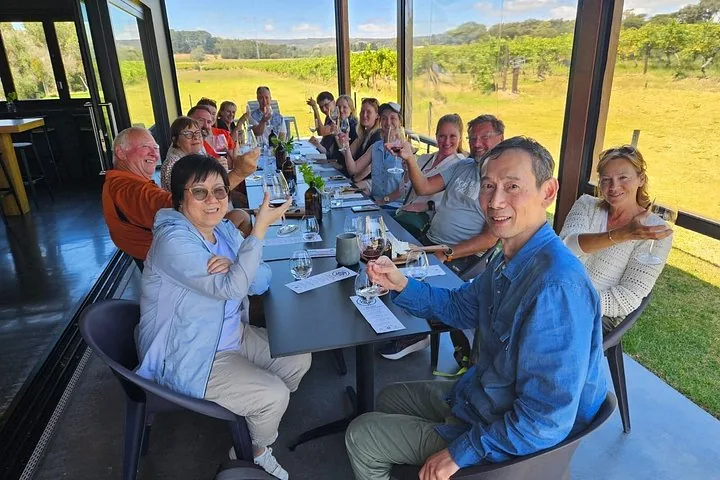
If you taste only one wine style in the Adelaide Hills, make it Chardonnay or Pinot Noir; add Sauvignon Blanc for a third, and leave room for sparkling, peppery Shiraz, bone-dry Riesling and Grüner Veltliner if you want to see why the region is more than a cool-climate label. The easiest way to taste across those styles in one day without driving is a hop-on hop-off loop of 8–10 wineries and venues around Hahndorf: you get off at up to four, so you choose the cellar doors by the wines they pour, and tasting fees are extra. The dates below are for the Adelaide Hills & Hahndorf: Hop-On Hop-Off Tour, from $70 per person and rated 4.2/5 from 13 reviews on GetYourGuide; the same loop sold as the Adelaide Hills & Hahndorf Hop-On Hop-Off Wine Tour on Viator is rated 4.8/5 from 155 reviews, from $71. For a fixed day with the tastings included, the Small Group Adelaide Hills and Hahndorf Hideaway Tour from Adelaide pours at The Lane and Sidewood and includes lunch in Hahndorf, rated 4.8/5 from 205 reviews, from $175 per person.
Check Availability
Same ride, also on Viator
From $71 per person · ★ 4.8 from 155 Viator reviews
Each platform sets its own price and collects its own reviews, so compare both before you book on GetYourGuide.
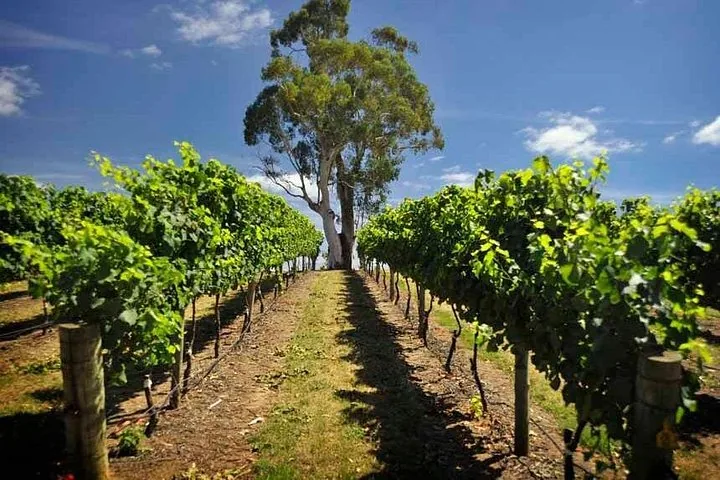
The Adelaide Hills is one of Australia’s coolest and highest major wine regions. Its vineyards start above 300 metres, and the highest reach roughly 600–650 metres. The cooler conditions slow ripening and keep acidity, which is why so many Hills wines taste fresh, precise and fairly elegant, without the weight or jamminess of warmer regions.
That does not make every Hills wine taste the same. The region runs about 70 kilometres through the Mount Lofty Ranges, a patchwork of slopes, heights and microclimates. Chardonnay and Pinot Noir do best in the coolest places; Sauvignon Blanc, Riesling and Pinot Gris suit slightly warmer sites; and well-chosen vineyards can ripen Shiraz, the Cabernets and Merlot.
Short answer: the Adelaide Hills is best known for Chardonnay, Pinot Noir, Sauvignon Blanc and sparkling wine, and some of its most interesting bottles are cool-climate Shiraz, Riesling and Grüner Veltliner.
New to Adelaide Hills wine? Taste these six, in this order: sparkling → Sauvignon Blanc → Chardonnay → Grüner Veltliner → Pinot Noir → Shiraz.
Best Adelaide Hills wines at a glance
| Wine | Typical Adelaide Hills style | Best for |
|---|---|---|
| Chardonnay | Bright, elegant, textured, high-acid | The region’s most serious white |
| Pinot Noir | Red-fruited, savoury, silky, spicy | Light-red drinkers |
| Sauvignon Blanc | Dry, crisp, vibrant, defined fruit | Summer drinking |
| Sparkling | Fine, crisp Chardonnay and Pinot Noir styles | Aperitifs and celebrations |
| Shiraz / Syrah | Peppery, spicy, lighter and fresher than warm-climate Shiraz | Red drinkers who want elegance |
| Riesling | Dry, linear, citrus-driven | Seafood and fans of crisp whites |
| Grüner Veltliner | Dry, citrusy, peppery, mineral | Something different |
| Pinot Gris / Grigio | Fresh to gently textured | An easy-drinking white |
| Rosé | Usually dry and fresh | Warm-weather cellar-door drinking |
For more to book around a Hills tasting day, from Hahndorf food tours and Mount Lofty Summit to Cleland Wildlife Park and Barossa Valley day trips, browse these:
1. Chardonnay: the wine to taste first
The Adelaide Hills has become one of Australia’s leading regions for modern cool-climate Chardonnay.
Adelaide Hills Wine describes the local style as elegant, textured and lean, with enough acidity to age, a long way from the broad, heavily oaked Chardonnay that shaped many people’s idea of Australian white wine decades ago.
A good Hills Chardonnay tends to be:
- citrusy, not tropical;
- fresh, not buttery;
- textured without being heavy;
- subtly creamy, not obviously oaky;
- tightly structured when young;
- more complex as it warms in the glass.
Depending on the vineyard and the winemaking, you may find lemon, grapefruit, white peach, nectarine, apple, cashew, toast or a struck-match savouriness. What usually marks it out is the balance of fruit, texture and acidity.
Why Chardonnay does so well here
The coolest Hills sites give Chardonnay time to ripen while it keeps its acidity. Adelaide Hills Wine compares the Piccadilly Valley’s ripening conditions with Champagne’s, which suits both Chardonnay and Pinot Noir.
The same grapes go into some of the region’s best sparkling wines as well as still Chardonnay.
Cellar doors to look for
Producers known for Adelaide Hills Chardonnay include:
- Shaw + Smith
- Tapanappa
- Petaluma
- Deviation Road
- The Lane
- Nepenthe
- Anderson Hill
- Ngeringa
- Murdoch Hill
- Ashton Hills
- Vinteloper
The regional Chardonnay list runs much longer, a sign that this is one of the Hills’ core grapes. For where to taste, see the best Adelaide Hills cellar doors.
What to eat with it
Try Chardonnay with:
- roast chicken;
- salmon;
- creamy pasta;
- soft cheese;
- grilled vegetables;
- richer seafood.
Best for
Visitors who think they don’t like Chardonnay. A Hills tasting is a good place to change your mind.
Other Experiences
Other experiences you might enjoy
More Adelaide Hills wine tours, each with its own page and booking link.

2. Pinot Noir: the signature red
If Chardonnay is the Hills’ flagship white, Pinot Noir is its red counterpart.
Adelaide Hills Wine calls the region a “Pinot playground”, for the range of sites and styles. Pinot here can be bright and silky or earthy, savoury and spicy, so taste it at more than one winery.
A lighter example might show:
- strawberry;
- raspberry;
- cherry;
- floral notes;
- gentle spice.
A more savoury bottle may lean towards:
- dark cherry;
- dried herbs;
- forest floor;
- mushroom;
- spice;
- subtle oak.
Do not expect a big, tannic red. Hills Pinot is usually about perfume, acidity and texture.
Why Pinot Noir works here
Pinot Noir is sensitive to heat. Cool sites let it ripen slowly and stay fresh, which is why the coolest parts of the Hills are so closely tied to the grape. Lenswood and the Piccadilly Valley are the two names to know, though good Pinot comes from elsewhere in the region too.
Where to try it
The regional Pinot Noir list includes:
- Ashton Hills
- Shaw + Smith
- Deviation Road
- Golding Wines
- Lobethal Road
- Petaluma
- Artwine
- Vinteloper
- Riposte
- K1 by Geoff Hardy
- Mt Lofty Ranges Vineyard
What to eat with it
Pinot Noir is one of the easiest reds to match with food. Try it with:
- duck;
- mushroom dishes;
- pork;
- salmon;
- roast chicken;
- soft or semi-firm cheeses.
Best for
Anyone who finds Australian Shiraz too heavy. For more on the grape, its subregions and the cellar doors that pour it, see our Adelaide Hills Pinot Noir guide.
3. Sauvignon Blanc: the refreshing local classic
Sauvignon Blanc has long been one of the most recognisable Adelaide Hills wines.
The local style is usually dry, fresh and sharply defined, with strong acidity and bright fruit; Adelaide Hills Wine describes it as textured, vibrant and crisp, more than simply aromatic.
Depending on the vineyard and the winemaking, you might find:
- lime;
- grapefruit;
- passionfruit;
- gooseberry;
- fresh herbs;
- nettle;
- tropical fruit;
- subtle grassy notes.
The best examples are more than fruity. They have enough acidity and texture to stay refreshing through a meal.
Why Sauvignon Blanc works here
The Hills have plenty of cool, though not cold, sites where Sauvignon Blanc builds strong aromatics and keeps its crisp acidity.
It grows widely across the region, including around Woodside and other central Hills districts. The regional association’s vineyard-monitoring sites include Sauvignon Blanc at Woodside (407 metres) and Kuitpo (301 metres).
Producers to look for
The regional list includes:
- Shaw + Smith
- The Lane
- Petaluma
- Nepenthe
- Bird in Hand
- Sidewood
- Golding
- Wicks Estate
- Anderson Hill
- Longview
- Pike & Joyce
- Lobethal Road
and many others.
Food pairing
This is one of the easiest Hills wines for lunch. Try it with:
- oysters;
- prawns;
- white fish;
- goat cheese;
- salads;
- Vietnamese or Thai-style dishes;
- fresh herbs.
Best for
Hot days, seafood and anyone who wants something instantly refreshing.
4. Sparkling wine: one of the Hills’ quiet strengths
The Hills deserve more attention for sparkling wine than many first-time visitors give them.
Height helps grapes keep their acidity, and Chardonnay and Pinot Noir, the two classic grapes of traditional-method sparkling, already do well here. Adelaide Hills Wine says the altitude gives the region good conditions for keeping acidity and building flavour in the Chardonnay and Pinot Noir grown for sparkling wine.
That gives local sparkling what you want in the glass:
- crisp acidity;
- restrained fruit;
- freshness;
- finesse;
- the potential for savoury lees character.
What styles will you find?
Depending on the producer, you may find:
- Blanc de Blancs;
- Pinot Noir and Chardonnay blends;
- sparkling rosé;
- vintage sparkling;
- non-vintage sparkling;
- pét-nat and more experimental styles.
Where to taste sparkling wine
The regional sparkling list includes:
- Deviation Road
- Petaluma / Croser
- Golding Wines
- Bird in Hand
- Sidewood
- K1 by Geoff Hardy
- Nepenthe
- Ngeringa
- Tapanappa
- The Lane
- Howard Vineyard
- Pike & Joyce
among many others.
If sparkling is your main interest, go to Deviation Road, which has built its name on traditional-method styles.
Food pairing
Try Hills sparkling with:
- oysters;
- chips or fried food;
- soft cheese;
- charcuterie;
- smoked salmon;
- picnic food.
Sparkling wine with salty fried food works well.
Best for
The first tasting of the day. Starting with sparkling before Chardonnay and Pinot Noir gives you a logical Hills tasting order.
5. Shiraz and Syrah: not the Shiraz you may expect
This is one of the most useful wines to taste if you are visiting several South Australian regions, because Adelaide Hills Shiraz can taste markedly different from warm-climate South Australian Shiraz.
Instead of very ripe blackberry fruit, high alcohol and a dense texture, the local style tends towards:
- black or red fruit;
- black pepper;
- herbs;
- spice;
- freshness;
- finer tannins.
Adelaide Hills Wine describes the local Shiraz as elegant and refreshing, with fairly modest alcohol, pepper-and-spice aromas and fine tannins. If your picture of Australian Shiraz comes from big, warm-region reds, it can be a revelation.
Where to try it
Producers include:
- Sidewood
- Petaluma
- Anderson Hill
- Howard Vineyard
- K1 by Geoff Hardy
- Elysian Springs
- Karrawatta
- Anvers
- Mt Bera
- Lambrook
Some winemakers label it Syrah, especially when they aim for a lighter, more Rhône-like style.
What to eat with it
Try it with:
- lamb;
- beef;
- mushrooms;
- charcuterie;
- aged cheddar;
- grilled vegetables.
Best for
Visitors doing the Adelaide Hills and the Barossa on the same trip. Taste Shiraz in both regions and you will quickly see how much climate matters.
6. Riesling: the under-the-radar white
Riesling is not the Hills’ most famous grape, but serious white-wine drinkers often find it one of the most rewarding.
The local style is dry, taut and high in acidity; Adelaide Hills Wine calls it bone-dry, with strong linearity and length, much of it grown on steep sites.
Expect notes of:
- lime;
- lemon;
- green apple;
- white flowers;
- wet stone;
- subtle spice.
Young Riesling can be very crisp, and good bottles can age well.
Producers to look for
The regional list includes:
- Shaw + Smith
- Tapanappa
- Howard Vineyard
- K1 by Geoff Hardy
- The Lane
- Wicks Estate
- Longview
- Petaluma
- Riposte
- Murdoch Hill
- Pike & Joyce
- Mt Lofty Ranges Vineyard
Food pairing
Try Riesling with:
- Thai food;
- Vietnamese food;
- seafood;
- pork;
- spicy dishes;
- fresh cheese.
Best for
People who assume Riesling is sweet. Most Hills Riesling poured at cellar doors shows the grape’s dry, high-acid side.
7. Grüner Veltliner: the wine to try for something distinctive
If you drink plenty of Chardonnay and Sauvignon Blanc at home, Grüner Veltliner may be the most interesting white to look for here.
The Austrian grape has a strong Adelaide Hills identity. The region planted South Australia’s first Grüner Veltliner in 2008, and Adelaide Hills Wine describes the local style as citrus, stone fruit and textured minerality. The association now promotes the Hills as a home for the variety.
What does Grüner Veltliner taste like?
Think:
- lime;
- green apple;
- pear;
- white pepper;
- stone fruit;
- herbs;
- a mineral texture.
It can be as fresh as Riesling, with a more savoury, peppery edge.
Where to try it
A logical Grüner route takes in:
- Hahndorf Hill, where the Hills’ Grüner story began
- Artwine, in Woodside
- Pike & Joyce, in Lenswood
Adelaide Hills Wine highlights those three as stops for exploring the grape. Other producers include CRFT, K1, Longview and Deviation Road.
Food pairing
Grüner is very good with:
- schnitzel;
- pork;
- Asian dishes;
- vegetables;
- fresh herbs;
- soft cheese.
Best for
The adventurous bottle on your flight. If you already know Chardonnay and Pinot Noir, try this next.
8. Pinot Gris and Pinot Grigio: same grape, different intent
Pinot Gris and Pinot Grigio are the same grape, but the labels often signal different styles.
Pinot Grigio usually means:
- a lighter body;
- crisp acidity;
- fresh pear or apple;
- simple, refreshing drinking.
Pinot Gris often means:
- more texture;
- riper fruit;
- more body;
- sometimes lees or barrel influence.
These are conventions with no legal force, so taste before you buy.
The Hills’ cool climate suits both approaches. Producers of Pinot Grigio include Artwine, Howard Vineyard, Bird in Hand, Hahndorf Hill, Longview and Golding.
Best for
Anyone who wants an easy white but finds Sauvignon Blanc too aromatic.
9. Rosé: a good addition to a summer tasting
Rosé is not the wine that defines the Hills abroad, but it suits the region. High natural acidity lets winemakers make rosé that is fresh and dry instead of soft or sugary.
Styles vary because rosé can be made from Pinot Noir, Shiraz, Grenache and other grapes. Expect:
- strawberry;
- watermelon;
- red cherry;
- citrus;
- rose petals;
- herbs.
It makes most sense in spring and summer, when you are spending time on winery lawns and terraces.
Best with
- charcuterie;
- salads;
- seafood;
- pizza;
- cheese boards.
For which local wines to order with a cheese board, see our guide to Adelaide Hills wine and cheese tastings.
What is the Adelaide Hills most famous for?
Reduced to four wines:
- Chardonnay
- Pinot Noir
- Sauvignon Blanc
- Sparkling wine
Those four show most clearly how the Hills differ from South Australia’s warmer wine regions.
Stopping there would miss much of the reason to visit, though. Height, slope, aspect and local climate change a lot across the region. It has two registered subregions, Lenswood and the Piccadilly Valley, and even vineyards outside them can differ sharply from one another.
That variety is why a single flight can move from sparkling to Sauvignon Blanc, Chardonnay, Pinot Noir and Shiraz with none of them out of place.
Why Adelaide Hills wine tastes different
The short explanation is altitude; the fuller one is altitude plus topography.
The Adelaide Hills geographical indication covers land above 300 metres. Temperatures fall as you climb, by roughly 0.5°C for every 100 metres, according to Adelaide Hills Wine.
That matters most at night: cool nights help grapes keep acidity while flavour and colour build slowly.
The contrast with the city is clear:
- Adelaide’s mean January temperature: about 23.3°C
- Stirling, in the Hills: about 18.2°C
Yet Stirling is only about 15 kilometres from Adelaide.
The Hills also get more rain than the plains below, though rainfall varies a lot across the region.
The result is a region where winemakers can aim for freshness and slow ripening and still reach ripe flavour.
What does “cool-climate wine” mean?
The phrase is on labels and brochures everywhere, and it has practical effects. Grapes in cooler places usually ripen more slowly than grapes in hot regions. That can mean:
- higher natural acidity;
- lower potential alcohol;
- fresher fruit;
- more delicate aromas;
- a longer growing season.
Adelaide Hills Wine links cool ripening with more elegant flavours and higher acidity, which can also help a wine age.
It does not mean the wine is automatically better, only that the style tends to differ. Where Barossa Shiraz is often rich and powerful, Hills Shiraz is more likely to show pepper, fragrance and freshness, and that contrast is one of the best things to explore on a South Australian wine trip.
Lenswood and the Piccadilly Valley
These are the two official subregions of the Adelaide Hills geographical indication.
Piccadilly Valley
The Piccadilly Valley is among the coolest parts of the region. It is closely associated with:
- Chardonnay;
- Pinot Noir;
- sparkling wine.
Adelaide Hills Wine notes that its ripening conditions are in some ways comparable with Champagne’s, which helps explain why Chardonnay and Pinot Noir do so well there.
Lenswood
Lenswood is also high and cool, and is known for:
- Chardonnay;
- Pinot Noir;
- Sauvignon Blanc;
- Riesling;
- Shiraz on suitable sites.
The regional association’s monitoring vineyards in Lenswood sit at 427–442 metres and grow Chardonnay and Pinot Noir; some Lenswood vineyards are higher, such as Anderson Hill’s at 600 metres.
As a visitor, you do not need to worry about subregion boundaries. Height, slope and exposure can change a wine a great deal over short distances.
If you only have one day, which wines should you taste?
Avoid drinking the same grape at every cellar door. A more useful order for one day:
First winery
Sparkling wine and Sauvignon Blanc. Fresh, high-acid styles are easiest while your palate is fresh.
Second winery
Chardonnay with Grüner Veltliner or Riesling. Now compare texture and aroma.
Lunch
Pinot Noir, which suits many winery lunches. For where to eat, see our Adelaide Hills wineries with lunch.
Final winery
Pinot Noir and Shiraz. Finish by comparing two very different reds.
That order teaches you far more about the Hills than six Sauvignon Blanc tastings. A tour that visits several wineries makes this easy; compare the options in the best Adelaide Hills wine tours.
The best Adelaide Hills wine for what you already drink
| If you normally drink… | Try in the Adelaide Hills |
|---|---|
| Chablis | Lean Adelaide Hills Chardonnay |
| White Burgundy | Textured premium Chardonnay |
| Sancerre | Sauvignon Blanc |
| Marlborough Sauvignon Blanc | Local Sauvignon Blanc, for comparison |
| Champagne | Traditional-method sparkling |
| German dry Riesling | Adelaide Hills Riesling |
| Austrian Grüner | Hahndorf Hill or another local Grüner |
| Burgundy Pinot Noir | Premium Adelaide Hills Pinot Noir |
| Barossa Shiraz | Adelaide Hills Shiraz, for contrast |
| Pinot Grigio | Local Pinot Grigio or Pinot Gris |
Best Adelaide Hills wines for beginners
Start with:
- Sauvignon Blanc
- Chardonnay
- Pinot Noir
- Shiraz
They are familiar enough to make comparisons easy. Add Grüner Veltliner or Riesling once you have a baseline.
Instead of asking “Is this wine good?”, ask “How is this different from the last glass?” That turns a cellar-door visit from drinking into tasting. For how a tasting works, see our Adelaide Hills wine tasting guide.
Best Adelaide Hills wines with food
If you are planning a winery lunch, not just a tasting, these are the most flexible:
Sparkling
Good with almost anything at the start of a meal.
Chardonnay
Excellent with richer fish, chicken and creamy dishes.
Pinot Noir
Probably the safest red for a mixed lunch menu.
Riesling
Very good with spice and seafood.
Grüner Veltliner
Good with vegetables and Asian flavours.
Shiraz
Order it when lunch moves to beef, lamb or richer dishes.
Which wine should you take home?
If you buy only one bottle, choose something that tastes of the region and is hard to find at home. That means premium Chardonnay or Pinot Noir.
If you already drink both regularly, buy Grüner Veltliner or a small-production Riesling. At a sparkling specialist, a traditional-method bottle makes a good souvenir.
A cellar-door-only release, a single-vineyard wine or a limited bottling is usually more interesting than an entry-level bottle you can find in the supermarket.
Should you buy older vintages?
Possibly, especially Chardonnay, Pinot Noir and Riesling. Higher acidity helps wines develop, and the Hills’ cool climate gives many premium wines enough structure to age.
Older is not automatically better, though. Ask the cellar-door staff:
- whether the wine is made to age;
- whether they would drink it now;
- how the current vintage differs from earlier ones;
- whether any museum or back-vintage bottles are available.
That conversation is often more useful than a vintage chart.
Adelaide Hills and Barossa wine styles
The simplest distinction:
- Adelaide Hills: cooler, fresher, more aromatic
- Barossa: generally warmer, richer, fuller-bodied
Both regions make a wide range of styles, but the split helps on a first visit.
The Adelaide Hills is most convincing for:
- Chardonnay;
- Pinot Noir;
- Sauvignon Blanc;
- sparkling wine;
- cool-climate Shiraz.
The Barossa is more closely tied to:
- full-bodied Shiraz;
- Grenache;
- Cabernet;
- old-vine reds.
If you have time for both, taste the same grape in each, especially Shiraz. For how the two compare as a day out, see Adelaide Hills vs Barossa Valley.
Adelaide Hills and McLaren Vale
McLaren Vale is generally warmer and known for:
- Shiraz;
- Grenache;
- Cabernet Sauvignon;
- Mediterranean varieties.
The Adelaide Hills is cooler and more closely tied to:
- Chardonnay;
- Pinot Noir;
- Sauvignon Blanc;
- sparkling wine.
These are tendencies, and both regions break them. When choosing between the two, start from the wine styles you prefer. See Adelaide Hills vs McLaren Vale for the full comparison.
When is the best time to taste Adelaide Hills wine?
Cellar doors open year-round and the wines do not change with the season, but the setting does.
Summer
Best for:
- Sauvignon Blanc;
- sparkling;
- rosé;
- outdoor tastings.
Autumn
Harvest and turning leaves make this one of the most atmospheric times to visit.
Winter
Good for:
- Chardonnay;
- Pinot Noir;
- Shiraz;
- long winery lunches.
Spring
Good all-round weather and fresh green vineyards.
For the wine itself, any month works. For weather and crowds month by month, see the best time to visit the Adelaide Hills.
How many wines should you taste?
Four to six wines in a flight is enough to understand a winery; you do not need to taste everything. If a list has 12 wines, ask the staff to help you pick an order such as:
- sparkling;
- Sauvignon Blanc;
- Chardonnay;
- Pinot Noir;
- Shiraz;
- something unusual.
Frequently asked questions
What wine is the Adelaide Hills most famous for?
Chardonnay, Pinot Noir, Sauvignon Blanc and sparkling wine. The cool, high vineyards suit Chardonnay and Pinot Noir especially well.
Is Adelaide Hills wine cool climate?
Yes. The Adelaide Hills is one of Australia’s cooler, higher wine regions, with vineyards starting above 300 metres and the highest reaching roughly 600–650 metres.
What is the best red wine from the Adelaide Hills?
Pinot Noir is the region’s signature red, and cool-climate Shiraz is also important. Hills Pinot leans to elegance and savoury red fruit; Hills Shiraz is usually more peppery and fresher than Shiraz from warmer South Australian regions.
What is the best white wine from the Adelaide Hills?
Chardonnay is the region’s most important premium white, and Sauvignon Blanc one of its best-known styles. Riesling and Grüner Veltliner are good alternatives if you want something less obvious.
Does the Adelaide Hills make sparkling wine?
Yes. Chardonnay and Pinot Noir grown at altitude keep the acidity good sparkling wine needs, and many Hills producers make traditional-method and newer sparkling styles.
Is Adelaide Hills Sauvignon Blanc like New Zealand Sauvignon Blanc?
They can share freshness and aromatic intensity, but Hills producers tend to make drier, more textured, crisp styles with clearly defined fruit. The style varies a lot by winery.
Is Adelaide Hills Shiraz heavy?
Usually lighter than the classic big Australian Shiraz. The local style shows pepper, spice, finer tannins, freshness and more moderate alcohol.
What unusual grape should I try in the Adelaide Hills?
Grüner Veltliner. The Adelaide Hills planted South Australia’s first Grüner in 2008, and Hahndorf Hill, Artwine and Pike & Joyce are good places to taste it.
What to taste first
On a first Adelaide Hills wine trip, this shortlist covers the region:
- Traditional-method sparkling, to understand the region’s acidity.
- Sauvignon Blanc, for its fresh, aromatic side.
- Chardonnay, to see why the Hills has become serious Chardonnay country.
- Grüner Veltliner or Riesling, for something less obvious.
- Pinot Noir, the region’s signature red.
- Shiraz, to see how far cool-climate Australian Shiraz can sit from the stereotype.
You do not need a 20-wine tasting to understand the Adelaide Hills. Six well-chosen glasses tell the story.
The wines to prioritise
No single blockbuster grape overshadows the rest in the Adelaide Hills, so a flight has plenty to compare.
Taste Chardonnay and Pinot Noir first, especially if you want to understand how altitude and slow ripening shape flavour. Sauvignon Blanc and sparkling show the region’s fresh, immediate side; Riesling and Grüner Veltliner are the ones to try when you want something less obvious. Shiraz shows most clearly what “cool climate” means: peppery and structured, not huge and jammy.
At the cellar door, resist ordering the same grape everywhere. Compare instead: sparkling against still Chardonnay, Sauvignon Blanc against Grüner, Pinot Noir against Shiraz. That is where the landscape starts to make sense in the glass.
Useful related guides
- Best wineries in the Adelaide Hills
- The best Adelaide Hills wine tours
- Adelaide Hills wine tasting guide
- Adelaide Hills Pinot Noir guide
- Best Adelaide Hills cellar doors
- Adelaide Hills wineries with lunch
- Adelaide Hills wine and cheese tastings
Regional facts were checked against Adelaide Hills Wine sources in October 2026. Producer lists change, so confirm what a cellar door is pouring before you go.
Spend a Day in the Adelaide Hills
Free cancellation up to 24 hours before. Adelaide Hills & Hahndorf: Hop-On Hop-Off Tour from $70 per person.
Check Availability & Book